Posts

The Engineering Marvel: Balls and Bearings

In the world of engineering and mechanics, there are certain inventions that stand out not just for their simplicity but for their profound impact on countless applications across various industries. One such invention is the humble ball and bearings —a testament to human ingenuity and the quest for efficiency in motion. What are Bearings? Bearings are mechanical components designed to reduce friction between moving parts and to facilitate smooth, efficient rotation or linear movement. They are crucial in everything from simple household appliances to complex machinery used in manufacturing, automotive, aerospace, and beyond. The Role of Balls in Bearings At the heart of many modern bearings lies the ball—a small, typically spherical object made from materials like steel, ceramic, or even plastic. The ball's shape allows it to efficiently distribute the load and reduce friction between the moving parts of the bearing. This simple yet effective design minimizes energy loss due to fr...
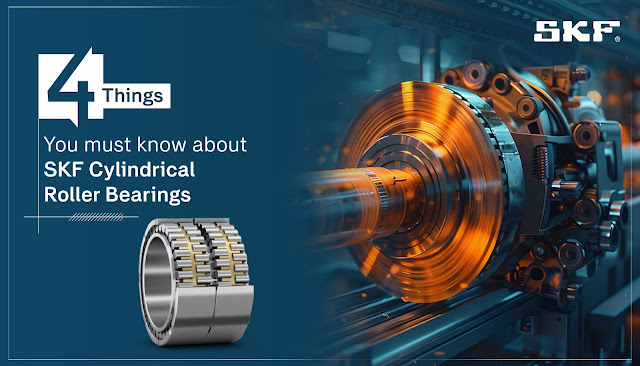
4 Things You Must Know About SKF Cylindrical Roller Bearings

Image
Does heavy-duty machinery not match the pace in keeping up with productivity and performance? Here, the cylindrical roller bearing pattern is superior. The Cylindrical roller bearings are designed primarily to handle radial loads at high speed as they offer high load capacity. Simple in structure and linear contact with the raceways, this bearing type has low friction between the rollers and the ring, accelerating high-speed rotation in heavy-duty machinery. If you want to buy a cylindrical roller bearing that can carry multiple radial loads rotating in heavy machinery types, cylindrical bearings are what you need. Not just this, but cylindrical bearings also possess some factors you should consider to optimize your results while reducing your cost and time. Some of the exclusive features or benefits of cylindrical bearings are: Excellent load-carrying capacity High stiffness, making the rotation go on and on Accommodate axial displacement Lower ...

Exploring the Differences Between Radial and Thrust Bearings

Image
  Bearings are the most commonly used components in machines and equipment parts. They are designed with precision and engineering and consist of a cage, an inner and outer race, and a row of balls. Bearings in machinery and any component that rotates and functions ensure efficiency and smoothness while minimizing friction. There are different types of bearings for varied purposes and functions. Each type of bearing is a masterpiece of engineering tailored to specific applications in diverse industries. Two of the bearings are radial and thrust bearings .   Read the complete blog to know more about radial and thrust bearings and how they are different from each other. What are Radial Bearings? There are two kinds of loads in machine applications: radial and axial. Radial bearings support radial loads perpendicular to the axis of rotation. These are the ideal bearings commonly used in applications like motors, pumps, fans, and transmissions where rotational motion ...

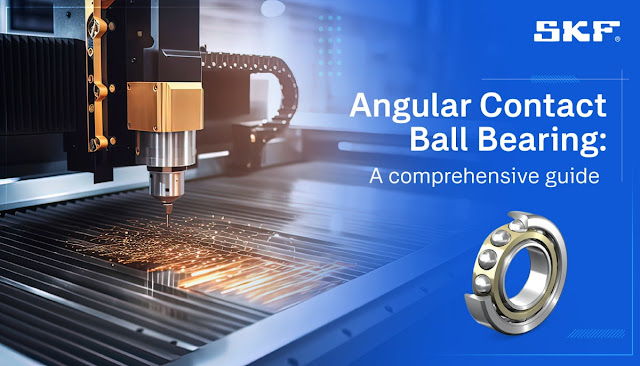
Angular Contact Ball Bearing: A Comprehensive Guide

Image
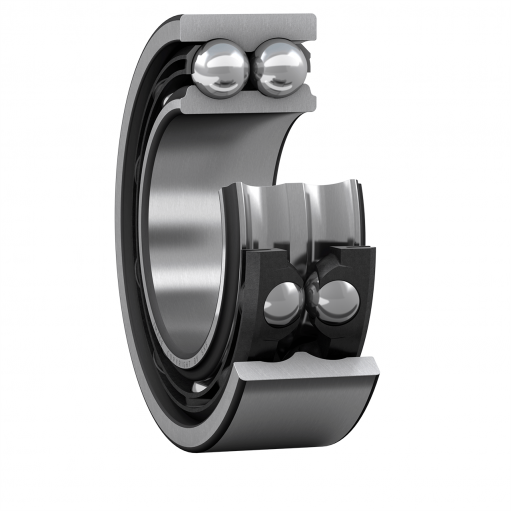
  The angular contact ball bearing is one of the types of ball bearings that plays a significant role in machinery's functioning. Especially engineered to handle axial and radial loads and facilitate load capacity, these bearings are pivotal in smoothing operations and enhancing efficiency. Moreover, these bearings are a game changer in various industries, including industrial, automotive, aerospace, etc., in pumps, electric motors, gearboxes, and clutches. Reading the complete blog will provide a comprehensive guide about the design and functioning of angular bearings, their use cases, and benefits, helping you better understand their implementation in business and operations. What are Angular Contact Ball Bearings? Angular rolling bearings are the type of bearing that has balls and makes contact angles with inner and outer rings. Unlike standard ball bearings, that angle creates the point of contact between the race and the ball. They are designed to carry heavy axial and...

Features and Applications of Self Aligning Ball Bearings

Image
  Bearings are the parts of machine elements that accelerate and function in a rotational motion.  Bearings  are a desirable component that reduces friction when in motion and aids in smoother functioning. They also support the shafts that rotate inside the machines. Advancements and industrialization have brought various types of bearings to the industry. Every different bearing has its own set of specifications and features. One of the major categories is the ball bearing type, also known as the rolling ball bearing, designed to carry loads while minimizing friction. Likewise, they can also support radial and axial loads in any machinery. The consistent advancement in technology and rising demands in the industry have led to the utilization of another type of ball bearing, which is a  self aligning ball bearing . Reading the entire blog will give you insights into what a  self aligning roller bearing  is, its features, and its applications. Wha...

Angular Contact Bearings: Its Applications & Types

Image
Angular contact bearings are used for diverse purposes due to their design and usage. It usually depends on the contact of the angle. Also called special ball bearings, these   angular contact bearings   usually have the advantage of axial load-carrying capacity. These bearings are specifically manufactured to support high axial and radial loads and enable precise axial positioning. In this article, we will understand the designs, application and usage of these angular contact bearings.  What is an angular contact bearing? Here are the following components in an angular contact bearing:  The angular contact bearing consists of outer and inner rings, raceways, balls and the cage. The inner ring in a bearing is the place it is connected to, whereas the outer ring is basically the bearing’s exterior that protects the other components from different factors. These bearings also have inner and outer raceways that are responsible for forming the inclined contact angle. To ...