Posts

Showing posts with the label Angular Contact Ball Bearing

Angular Contact Ball Bearing: A Comprehensive Guide

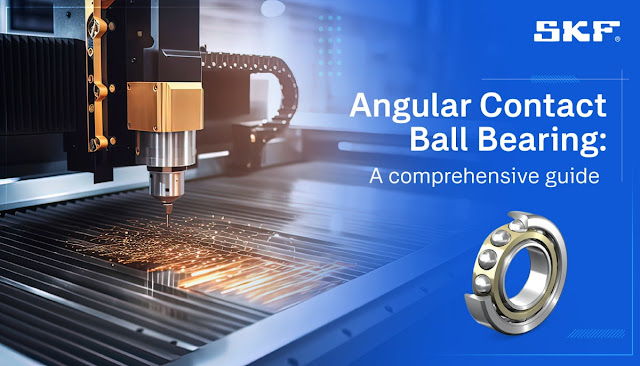
 The  angular contact ball bearing  is one of the types of ball bearings that plays a significant role in machinery's functioning. Especially engineered to handle axial and radial loads and facilitate load capacity, these bearings are pivotal in smoothing operations and enhancing efficiency. Moreover, these bearings are a game changer in various industries, including industrial, automotive, aerospace, etc., in pumps, electric motors, gearboxes, and clutches. Reading the complete blog will provide a comprehensive guide about the design and functioning of angular bearings, their use cases, and benefits, helping you better understand their implementation in business and operations. What are Angular Contact Ball Bearings? Angular rolling bearings are the type of  bearing  that has balls and makes contact angles with inner and outer rings. Unlike standard ball bearings, that angle creates the point of contact between the race and the ball. They are designed to carry ...
Different Types of Ball Bearings You Must Know

Image
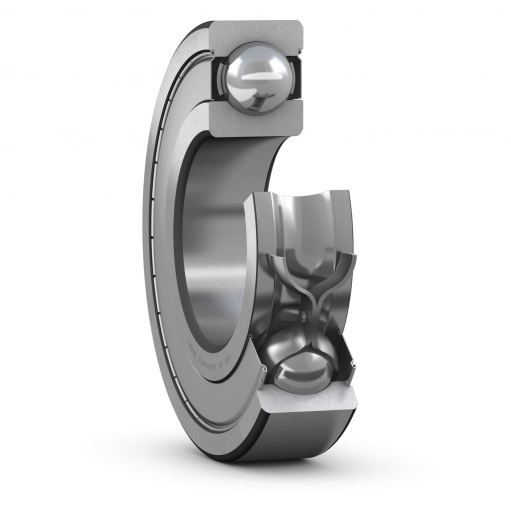
  Different Types of Ball Bearings You Must Know Just as humans need water to stay energized, machines rely on bearings to function smoothly and maintain productivity. Bearings reduce friction, wear and tear, and downtime, making them indispensable in industries where machines run for extended periods. However, different operations require different types of ball bearings , specifically engineered to meet the unique needs of various industries. One such critical type is the ball bearing. What is a Ball Bearing? A ball bearing is a rolling bearing that reduces friction by managing balls placed between moving parts. It distributes the load evenly, supporting both radial and axial loads, which ensures smooth operation over time, improving machine performance and productivity. Ball bearings are designed to enhance the performance of mechanical systems by reducing friction. To match diverse machinery needs, ball bearings are classified into several types. Types of Ball Bearings Deep Gro...

Understanding Angular Contact Ball Bearings: A Comprehensive Guide

Image
 When it comes to precision engineering and high-performance machinery, bearings play a critical role in ensuring smooth and efficient operation. Among the various types of bearings, the angular contact ballbearing stands out for its unique design and impressive capabilities. In this blog, we’ll explore what angular contact ball bearings are, how they work, and where they’re commonly used.   What is an Angular Contact Ball Bearing?   Angular contact ball bearings are designed to support both radial and axial loads simultaneously. Unlike standard radial ball bearings, which are optimized primarily for radial loads, angular contact ball bearings are engineered to handle forces that are directed along the axis of the bearing.   Key Features:   1. Angular Contact: The defining feature of these bearings is the angular contact between the balls and the races. This angle is typically between 15° and 40°, depending on the specific design and application require...

Angular Contact Ball Bearing: A Comprehensive Guide

Image
  The angular contact ball bearing is one of the types of ball bearings that plays a significant role in machinery's functioning. Especially engineered to handle axial and radial loads and facilitate load capacity, these bearings are pivotal in smoothing operations and enhancing efficiency. Moreover, these bearings are a game changer in various industries, including industrial, automotive, aerospace, etc., in pumps, electric motors, gearboxes, and clutches. Reading the complete blog will provide a comprehensive guide about the design and functioning of angular bearings, their use cases, and benefits, helping you better understand their implementation in business and operations. What are Angular Contact Ball Bearings? Angular rolling bearings are the type of bearing that has balls and makes contact angles with inner and outer rings. Unlike standard ball bearings, that angle creates the point of contact between the race and the ball. They are designed to carry heavy axial and...