Posts

SKF Solutions and the Role of Cylindrical Roller Bearings in Industrial Efficiency

 In today’s competitive industrial and automotive landscape, businesses are constantly looking for ways to improve efficiency, reduce energy consumption, and extend the life of their equipment. SKF has become a trusted name in delivering innovative solutions that help organizations achieve these goals through advanced engineering and reliable bearing technologies. Through Emarketplace, industries can access high-quality SKF products that support long-term operational success. One of the most important components in modern machinery is the cylindrical roller bearing . Designed to handle heavy radial loads while maintaining smooth rotational movement, these bearings are widely used in manufacturing plants, automotive systems, mining equipment, and power generation facilities. Their robust construction helps reduce friction and improve machine performance, making them a preferred choice across multiple industries. As businesses strive to lower maintenance costs and increase productivi...
Ball Bearings vs. Roller Bearings: Understanding the Right Choice for Industrial Performance

 When it comes to machinery and industrial equipment, bearings play a crucial role in ensuring smooth movement, reducing friction, and improving operational efficiency. Selecting the correct bearing can significantly impact equipment performance, durability, and maintenance costs. One of the most common comparisons in the industry is Ball Bearings vs. Roller Bearings , as both serve important functions but are designed for different applications. At Emarketplace, we understand the importance of choosing the right bearing solution for your industrial requirements. Whether you’re working in manufacturing, automotive, construction, or heavy machinery, understanding the differences between these bearing types can help you make informed decisions. What Are Ball Bearings? Ball bearings use spherical balls as rolling elements between the inner and outer races. Their primary purpose is to reduce rotational friction while supporting both radial and axial loads. Because the contact area betw...

Improving Equipment Performance with SKF Bearing Grease

  In today’s fast-moving industrial and automotive sectors, businesses are constantly searching for reliable solutions that improve machine performance, reduce downtime, and increase operational efficiency. This is where SKF e-marketplace plays a significant role by offering advanced products and lubrication solutions that help industries maintain long-lasting equipment performance. One of the most essential products for smooth machinery operation is SKF bearing grease. Proper lubrication is the backbone of every rotating machine component, helping reduce friction, prevent wear, and improve reliability. Industries worldwide trust SKF e-marketplace for high-quality lubrication products designed to support heavy-duty applications and modern industrial needs. Why Lubrication Matters in Industrial Operations Machines operating under continuous pressure generate heat and friction. Without proper lubrication, components can wear out quickly, resulting in expensive repairs and production ...

Ball Bearings vs. Roller Bearings for Industrial Performance

  In today’s fast-moving industrial and automotive sectors, businesses rely on advanced engineering solutions to improve efficiency, reduce downtime, and extend machinery life. One of the most important components behind smooth machine operation is the bearing system. Through the innovation and reliability offered by SKF e-marketplace , industries can access high-quality bearing solutions that support long-term productivity and sustainability. Understanding the difference between Ball Bearings vs. Roller Bearings is essential for selecting the right component for industrial equipment. The right bearing not only improves machine performance but also minimizes maintenance and energy consumption. Understanding Bearings and Their Role Bearings are mechanical components designed to reduce friction between moving parts. They help machines operate smoothly while supporting rotational or linear motion. Industries such as automotive, manufacturing, mining, agriculture, and energy depend he...

Understanding Ball Bearings vs. Roller Bearings: Choosing the Right Solution with SKF E-Marketplace

  In today’s fast-evolving automotive and industrial landscape, efficiency and reliability are more important than ever. Components like bearings play a crucial role in ensuring smooth operations, reduced friction, and long-lasting performance. When it comes to selecting the right bearing, the debate of Ball Bearings vs. Roller Bearings often comes into focus. With the help of SKF e-marketplace, businesses can easily explore high-quality solutions tailored to their specific needs. To begin with, understanding the difference between Ball Bearings vs. Roller Bearings is essential. Ball bearings use small spherical balls to maintain separation between moving parts. These bearings are ideal for applications where low friction and high-speed performance are required. They are commonly used in electric motors, household appliances, and automotive components. On the other hand, roller bearings use cylindrical rollers, which provide a larger contact area. This makes them better suited for...

Angular Contact Ball Bearing: A Comprehensive Guide

 The  angular contact ball bearing  is one of the types of ball bearings that plays a significant role in machinery's functioning. Especially engineered to handle axial and radial loads and facilitate load capacity, these bearings are pivotal in smoothing operations and enhancing efficiency. Moreover, these bearings are a game changer in various industries, including industrial, automotive, aerospace, etc., in pumps, electric motors, gearboxes, and clutches. Reading the complete blog will provide a comprehensive guide about the design and functioning of angular bearings, their use cases, and benefits, helping you better understand their implementation in business and operations. What are Angular Contact Ball Bearings? Angular rolling bearings are the type of  bearing  that has balls and makes contact angles with inner and outer rings. Unlike standard ball bearings, that angle creates the point of contact between the race and the ball. They are designed to carry ...

Different Types of Ball Bearings You Must Know

Image
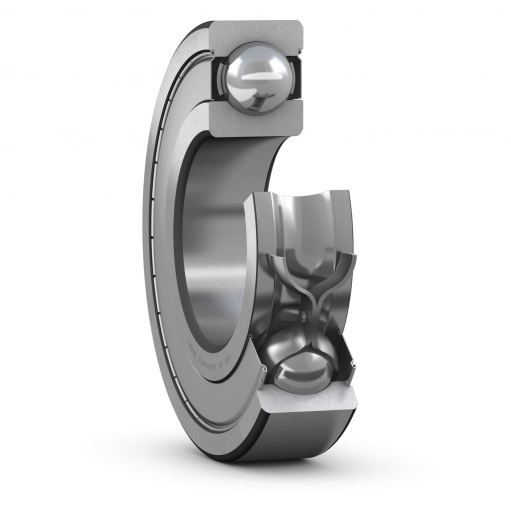
  Different Types of Ball Bearings You Must Know Just as humans need water to stay energized, machines rely on bearings to function smoothly and maintain productivity. Bearings reduce friction, wear and tear, and downtime, making them indispensable in industries where machines run for extended periods. However, different operations require different types of ball bearings , specifically engineered to meet the unique needs of various industries. One such critical type is the ball bearing. What is a Ball Bearing? A ball bearing is a rolling bearing that reduces friction by managing balls placed between moving parts. It distributes the load evenly, supporting both radial and axial loads, which ensures smooth operation over time, improving machine performance and productivity. Ball bearings are designed to enhance the performance of mechanical systems by reducing friction. To match diverse machinery needs, ball bearings are classified into several types. Types of Ball Bearings Deep Gro...

SKF: A Leader in Bearing Technology and Solutions

Image
 Founded in 1907 in Gothenburg, Sweden, SKF (Svenska Kullagerfabriken AB) has grown into one of the world's foremost manufacturers of bearings, seals, and lubrication systems. With a commitment to innovation and sustainability, SKF has positioned itself as a key player in various industries, including automotive, aerospace, industrial machinery, and energy. The Evolution of SKF From its humble beginnings, SKF revolutionized the bearing industry by introducing the first self-aligning ball bearing. This innovation laid the groundwork for the company's growth and development of advanced bearing solutions. Over the decades, SKF has continuously expanded its product portfolio, integrating cutting-edge technology and materials to enhance performance and durability. Product Range SKF offers a comprehensive range of products, including: Bearings : The core of SKF's offerings, these components are designed for high performance in a variety of applications, from electric motors to wi...

Understanding 6000 Bearing Dimensions: A Comprehensive Guide

Image
 When it comes to machinery and mechanical systems, bearings play a crucial role in ensuring smooth operation and minimizing friction. Among the various types of bearings, the 6000 series stands out due to its versatility and wide range of applications. In this blog, we will delve into the dimensions and specifications of 6000 bearings , providing you with the insights needed to select the right bearing for your projects. What are 6000 Bearings? The 6000 bearings are deep groove ball bearings characterized by their simple design and ability to accommodate both radial and axial loads. They are commonly used in electric motors, household appliances, automotive applications, and various industrial machines due to their reliability and efficiency. Key Dimensions of 6000 Bearings Understanding the dimensions of 6000 series bearings is essential for proper selection and application. Here are the key dimensions to consider: Inner Diameter (ID) : This is the diameter of the hole in the cen...

Understanding Angular Contact Ball Bearings: A Comprehensive Guide

Image
 When it comes to precision engineering and high-performance machinery, bearings play a critical role in ensuring smooth and efficient operation. Among the various types of bearings, the angular contact ballbearing stands out for its unique design and impressive capabilities. In this blog, we’ll explore what angular contact ball bearings are, how they work, and where they’re commonly used.   What is an Angular Contact Ball Bearing?   Angular contact ball bearings are designed to support both radial and axial loads simultaneously. Unlike standard radial ball bearings, which are optimized primarily for radial loads, angular contact ball bearings are engineered to handle forces that are directed along the axis of the bearing.   Key Features:   1. Angular Contact: The defining feature of these bearings is the angular contact between the balls and the races. This angle is typically between 15° and 40°, depending on the specific design and application require...

The Engineering Marvel: Balls and Bearings

In the world of engineering and mechanics, there are certain inventions that stand out not just for their simplicity but for their profound impact on countless applications across various industries. One such invention is the humble ball and bearings —a testament to human ingenuity and the quest for efficiency in motion. What are Bearings? Bearings are mechanical components designed to reduce friction between moving parts and to facilitate smooth, efficient rotation or linear movement. They are crucial in everything from simple household appliances to complex machinery used in manufacturing, automotive, aerospace, and beyond. The Role of Balls in Bearings At the heart of many modern bearings lies the ball—a small, typically spherical object made from materials like steel, ceramic, or even plastic. The ball's shape allows it to efficiently distribute the load and reduce friction between the moving parts of the bearing. This simple yet effective design minimizes energy loss due to fr...

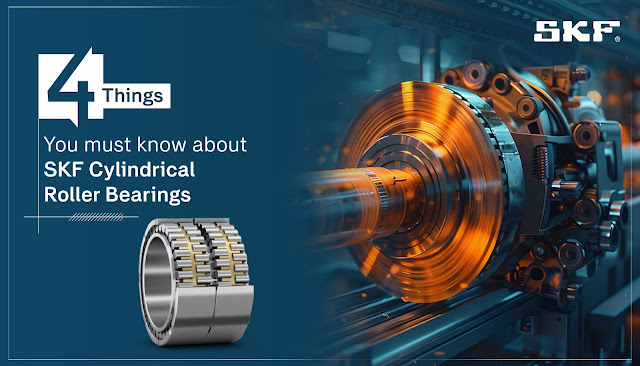
4 Things You Must Know About SKF Cylindrical Roller Bearings

Image
Does heavy-duty machinery not match the pace in keeping up with productivity and performance? Here, the cylindrical roller bearing pattern is superior. The Cylindrical roller bearings are designed primarily to handle radial loads at high speed as they offer high load capacity. Simple in structure and linear contact with the raceways, this bearing type has low friction between the rollers and the ring, accelerating high-speed rotation in heavy-duty machinery. If you want to buy a cylindrical roller bearing that can carry multiple radial loads rotating in heavy machinery types, cylindrical bearings are what you need. Not just this, but cylindrical bearings also possess some factors you should consider to optimize your results while reducing your cost and time. Some of the exclusive features or benefits of cylindrical bearings are: Excellent load-carrying capacity High stiffness, making the rotation go on and on Accommodate axial displacement Lower ...

Exploring the Differences Between Radial and Thrust Bearings

Image
  Bearings are the most commonly used components in machines and equipment parts. They are designed with precision and engineering and consist of a cage, an inner and outer race, and a row of balls. Bearings in machinery and any component that rotates and functions ensure efficiency and smoothness while minimizing friction. There are different types of bearings for varied purposes and functions. Each type of bearing is a masterpiece of engineering tailored to specific applications in diverse industries. Two of the bearings are radial and thrust bearings .   Read the complete blog to know more about radial and thrust bearings and how they are different from each other. What are Radial Bearings? There are two kinds of loads in machine applications: radial and axial. Radial bearings support radial loads perpendicular to the axis of rotation. These are the ideal bearings commonly used in applications like motors, pumps, fans, and transmissions where rotational motion ...